Nestled on Austria’s eastern frontier, bordering Hungary and sprawling across the Pannonian plain, Burgenland is a wine region that combines warm sunshine, diverse terroirs, and a bold winemaking identity. With around 11,600 ha of vineyards, it forms the backbone of Austrian premium wine production outside the ‘classic’ white-wine bastions.
In this long-form overview, we’ll explore its history, landscape, grapes and styles, key sub-regions (DACs), why it matters for wine enthusiasts, visiting tips, and food pairings.
A Short History of Burgenland Wine
Though Austria’s youngest federal state (officially since 1921), viticulture in Burgenland stretches far deeper into history, touching Celtic and Roman times. Over the centuries, the region’s Pannonian climate and soils encouraged a wine culture that merged Austrian and Hungarian traditions.
A major turning point occurred in the late twentieth century when Austrian wine gained renewed focus on quality after years of quantity-driven production. This shift paved the way for the region to develop its distinct identity, aiming to rival top red wine regions across Europe.
Today Burgenland stands out for two main traits: a strong dominance of red wines (unusual for Austria, which is more famous for whites) and its very high-quality sweet wines from botrytis-affected grapes.
The Landscape and Terroir
Burgenland’s geography and climate are integral to its wines:
- Climate: The region lies in the Pannonian basin, meaning hot summers, warm days, and cool nights. This produces full ripeness and leaves enough freshness for balance.
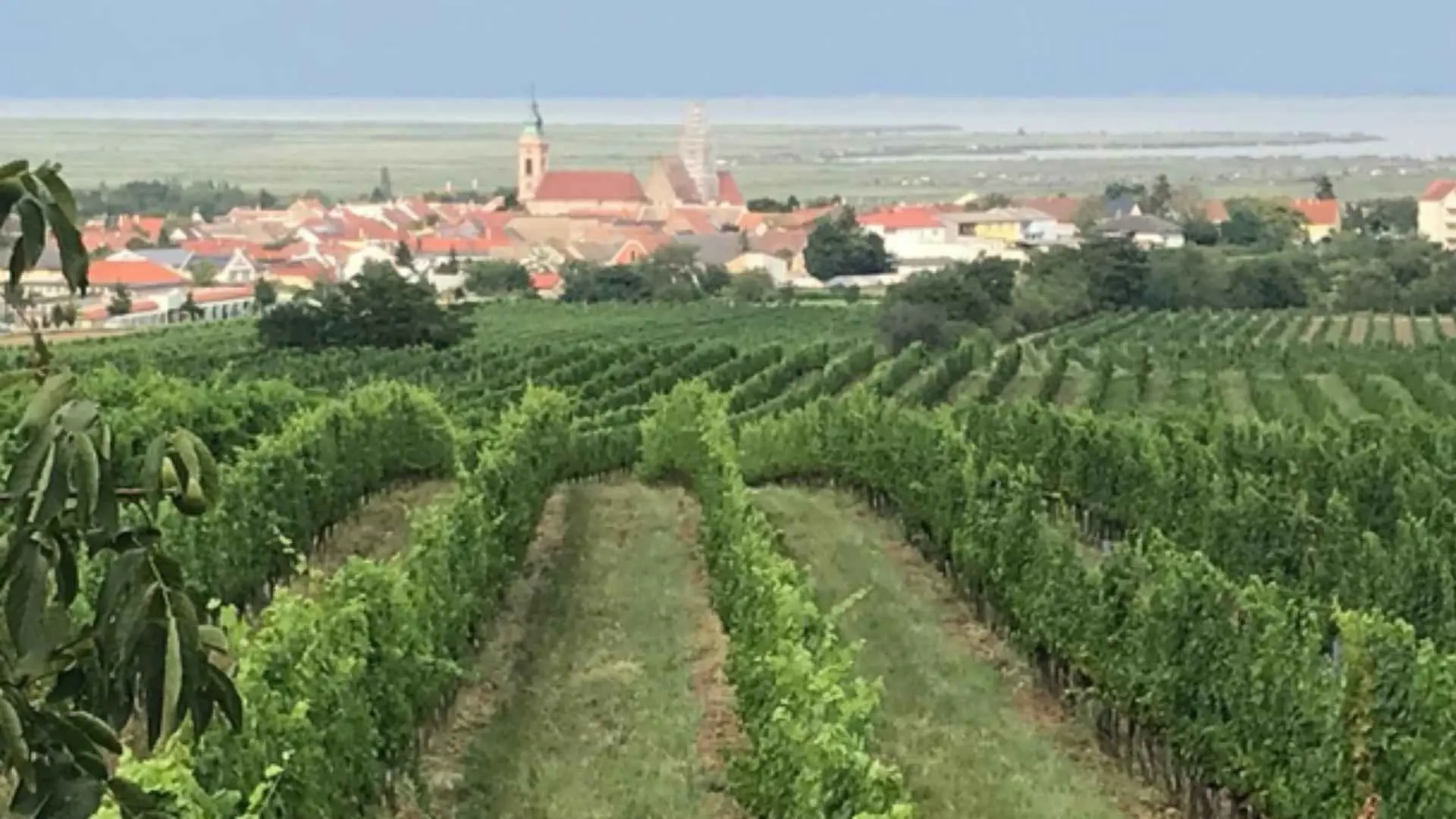
- Lake Neusiedl: A large shallow lake that moderates temperature and provides humid fall conditions favorable for noble rot (botrytis) and long ripening.
- Soils and terroir variety: From loess and clay in the flat plains near the lake to limestone and slate in the hills of Leithaberg and Eisenberg, the geological diversity enables different grape varieties and wine styles.
- Landscape: Vineyards near Lake Neusiedl, around small hill-ranges, and on older coral banks and limestone outcrops give the region a range of micro-terroirs.
The result: wines with typicity and a strong sense of place, whether it’s a spicy, mineral red from a limestone slope or a luscious, sweet white from vines by the lakeshore.
Main Grape Varieties & Wine Styles
Reds
- Blaufränkisch is often considered Burgenland’s flagship red. It thrives in the central and southern parts of the region (Mittelburgenland, Eisenberg) on limestone, loam, and slate soils, producing wines of dark color, spicy complexity, dark fruits and good aging potential.
- Zweigelt is more ubiquitous and accessible: planted in many parts of Austria, and in Burgenland it plays a strong role especially in the Neusiedlersee region for fruity and approachable reds.
- Other reds include St. Laurent, Pinot Noir, Merlot and occasional international varieties, used in blends or reserve wines.
Whites
While reds dominate the vineyard area, there’s also an important white-wine story:
- Welschriesling: Particularly in certain sub-regions, it makes crisp, mineral or aromatic whites and also late-harvest styles.
- Grüner Veltliner: Austria’s signature white grape is present, though less dominant than in e.g. Lower Austria.
- Fine white wines from Burgundian varieties (Chardonnay, Pinot Blanc/Weißburgunder) also flourish, especially in terroirs like Leithaberg with limestone soils.
Sweet Wines & Special Styles
One of Burgenland’s unique strengths is in botrytized sweet wines:
- Near Lake Neusiedl, the humid, moderated climate encourages the development of noble rot, leading to high-quality Beerenauslese (BA), Trockenbeerenauslese (TBA) and ice wines (Eiswein).
- The town of Rust has its famous Ruster Ausbruch, a special style of botrytized wine now a DAC in its own right.
Summary of Styles
- Powerful, spicy and age-worthy reds (Blaufränkisch, Zwiegelt blends)
- Elegant, mineral-driven whites (especially limestone terroirs)
- Lush, concentrated sweet wines from botrytis or ice-wine grapes
The DAC System: Key Sub-Regions in Burgenland
Austria uses the ‘DAC’ (Districtus Austriae Controllatus) system to designate quality wines typical of a specific area. Burgenland has several important DACs.
Mittelburgenland DAC
Located in central Burgenland, this is often referred to as ‘Blaufränkischland’ thanks to the dominance of Blaufränkisch in the region. Wines show dark fruit, spice and structure.
Eisenberg DAC
In the south, smaller in size but prestigious, this area produces very fine Blaufränkisch from loamy, iron-rich soils (especially around the Eisenberg hill). Also noted for some white wines and the local specialty Uhudler.
Uhudler is a naturally light, fruity wine made not from the usual European grape species (Vitis vinifera), but from direct American hybrid vines, mainly Isabella, Noah, Concord, Clinton, and Delaware. These are Vitis labrusca or Vitis riparia hybrids, which were originally planted to resist phylloxera, the vineyard pest that devastated Europe in the late 1800s.
Leithaberg DAC
West of Lake Neusiedl, this region on limestone and marl soils allows both white and red wines. The whites (Weißburgunder/Chardonnay/Grüner Veltliner) shine for mineral clarity; reds also have finesse.
Neusiedlersee DAC
Around and east of Lake Neusiedl, this zone is known for Zweigelt-based reds, and increasingly for sweet wines with botrytis.
Rosalia DAC
One of the newer DACs, the Rosalia region lies between Leithaberg and Mittelburgenland and offers powerful reds (Blaufränkisch/Zweigelt) and even rosés.
Why Burgenland Matters for Wine Lovers
- Red-wine leadership: While Austria is often thought of for whites (Grüner Veltliner, Riesling), Burgenland flips the script by being a red-wine stronghold, especially for Blaufränkisch, which shows serious depth and character.
- Sweet-wine excellence: The botrytized and late-harvest wines from Lake Neusiedl can rival great dessert wines from France, displaying intensity, balance and elegance.
- Terroir diversity: From flat lake shores to steep limestone slopes, the region offers a wide palette of soils and climates, meaning it can produce both bold and refined wines.
- Hidden gem appeal: Compared to the extremely famous regions like Burgundy or Barolo, Burgenland remains somewhat under-the-radar internationally, offering great value and discovery opportunities.
- Regional gastronomy: The Pannonian climate also influences the cuisine, peppers, paprika, freshwater fish from Lake Neusiedl, making the wine-food connection especially rich.
Visiting Burgenland: Wine Tourism & Practical Tips
If you’re considering a wine trip, here are some important hints and notes:
Getting there & around
- Burgenland is very accessible from Vienna (about 1-2 hours by car or train depending on destination).
- Renting a car or bike is ideal for reaching vineyards; some regions are suited to cycling.
- Many wineries require appointments for tastings, especially smaller, boutique producers.
Where to stay
- The towns around Lake Neusiedl (e.g., Gols, Rust) offer charming guesthouses and vineyard views.
- Mittelburgenland offers more rural, quiet stays near vineyards.
- Eisenberg region is smaller and more intimate, suitable if you prefer boutique lodging.
What to do
- Visit wineries focused on Blaufränkisch in Mittelburgenland or Eisenberg.
- Explore the lake region (Neusiedlersee) for sweet wines and scenic vineyards.
- Take part in cellar tours, guided tastings and wine hikes ; ‘wine trails’ are increasingly common in the central region.
- Enjoy regional cuisine: try Pannonian fish from the lake, paprika dishes, local cured meats. The pairing with local reds/whites is strong.
Best time to visit
- Spring through fall is probably best (April to October) to enjoy vineyard landscapes, open cellars, good weather.
- Harvest season in fall is ideal if you like seeing the picking process and vibrant landscapes.
- Many wineries may limit tasting times on Sundays, always check ahead.
Tasting & buying
- For reds, look out for Blaufränkisch labeled under DACs such as Mittelburgenland or Eisenberg: these often indicate serious quality.
- For white/mineral styles, wines from Leithaberg DAC.
- For sweet wines, keep an eye on Ruster Ausbruch, or late-harvest wines from Neusiedlersee.
- Many producers also offer excellent value wines outside of the premium labels; good chance to find something interesting.
Food Pairings & Regional Cuisine
Since the climate is warm and Pannonian, and the wine styles vary widely, there are many exciting pairings:
- Spicy Blaufränkisch reds pair beautifully with grilled meats, game, hearty stews and smoked sausages.
- Zweigelt or lighter reds can pair well with paprika-based dishes, roast poultry or vegetable gratins.
- Mineral whites from Leithaberg match freshwater fish from Lake Neusiedl (zander, trout), vegetable-rich dishes, or even white-meat with herb sauces.
- Botrytized sweet wines are excellent with dessert, rich blue cheeses, or even foie gras if you’re being indulgent.
Also, the region’s cuisine uses paprika, peppers, tomatoes, and fish from the lake, so think of wine matches that highlight that ‘sunny side’ flavor profile.
Challenges and Points to Note
- Because the region is wide and varied, the terminology and labels can sometimes be confusing (multiple DACs, multiple grape varieties).
- Some wines may use new oak or international styles, so if you prefer minimal intervention, check the producer.
- Visiting smaller wineries often requires appointment or advance notice.
- Although reds dominate, if you exclusively expect white wines, you might find fewer high-volume white landmarks compared to other Austrian regions.
Travel Tip: Wine, Culture, and Style in Eastern Austria
When planning a trip to Burgenland, consider pairing your wine experience with a dash of culture and shopping. Just a short drive away lies the renowned Designer Outlet Parndorf, ideal for some indulgent retail therapy, and the dynamic city of Vienna, brimming with history, art, and a charming café scene.
Together, these destinations create a perfectly balanced getaway, offering the finest mix of wine, culture, and shopping that eastern Austria has to offer.
Discover Burgenland Wine Region with Winera
Experience the sun-drenched charm of Austria’s Burgenland, where bold reds, elegant whites, and legendary sweet wines meet a landscape of lakes, hills, and endless vineyards. With Winera, exploring this remarkable wine region is effortless, book tastings, cellar tours, or full wine adventures in just a few clicks, and uncover the stories, flavors, and traditions that make Burgenland one of Europe’s most exciting wine destinations.
Weingut Peter Schandl - Wine Tour at Weingut Schandl (Burgenland, Austria)
Step into over 280 years of winemaking tradition at Weingut Peter Schandl, a family estate founded in 1741 in the charming lakeside town of Rust, Burgenland. Surrounded by the serene beauty of Lake Neusiedl, this historic winery invites visitors to taste their way through centuries of craftsmanship. Taste seven distinctive wines, including elegant whites, expressive reds, sparkling specialties, and the world-famous Ruster Ausbruch, Burgenland’s liquid gold. Wander through centuries-old cellars, learn about the region’s unique terroir, and pair the tasting with authentic local delicacies at the traditional Buschenschank.
Duration: 1 hour
Price: €30
Allacher Vinum Pannonia - Allacher’s Tasting Experience (Burgenland, Austria)
Discover the authentic flavors of Burgenland with Allacher Vinum Pannonia’s Tasting Experience, a sensory journey that goes far beyond a simple tasting. Set in the picturesque village of Gols, this guided experience features ten expertly crafted wines, from crisp whites and elegant rosés to bold reds, sparkling selections, and luscious dessert wines. Each sip is paired with local specialties like pork lard spread, liver pâté, and fresh bread. As you explore the winery and learn about Allacher’s family winemaking tradition, enjoy panoramic views stretching across Lake Neusiedl to the distant Schneeberg mountains, a breathtaking backdrop for a great tasting.

Duration: 2 hours 30 minutes
Price: €15
Weingut Umathum - Vineyard & Cellar Tour (Burgenland, Austria)
Step into the world of Weingut Umathum and experience Austrian winemaking at its finest. Stroll through scenic vineyards featuring rare grape varieties, breathe in the crisp Burgenland air, and learn about sustainable practices on-site. In the cellar, the winemaker shares insights into crafting wines with elegance, balance, and character. Conclude your visit with a tasting of seven exceptional wines, including whites, reds, and sparkling selections, each reflecting the region’s unique terroir and climate.

Duration: 1 hour 30 minutes
Price: €25
Sektkellerei Szigeti - Magnum Package (Burgenland, Austria)
Discover the art of sparkling wine at Szigeti with the Magnum Package. Join a guided cellar tour to learn how bubbles are crafted using the Méthode Traditionnelle, explore disgorging techniques, and understand how the perfect dosage brings sparkling wines to perfection. The experience concludes with a tasting of six exquisite sparkling wines, offering a full taste of Szigeti’s winemaking art.

Duration: 1 hour 30 minutes
Price: €17
Weingut Kracher - Burgenland Wine Journey (Burgenland, Austria)
Savor a memorable tasting experience at Weinlaubenhof Kracher in Illmitz, by the shimmering shores of Lake Neusiedl. Depending on the season, enjoy a tasting under the summer vines or in the elegant winter wine shop. Guided by the Kracher team, explore a curated selection of ten wines, from expressive dry whites and reds to the world-renowned sweet wines that have earned international acclaim. The experience includes house-made delicacies such as chicken liver pâté, Petit Blue Cheese, and wine jellies (subject to availability).

Duration: 1 hour 30 minutes
Price: €25
From the sunlit vineyards of Rust to the sparkling cellars of Gols and Illmitz, Burgenland invites you to taste, explore, and connect with Austria’s most expressive wines. Whether you’re sipping a world-class Ruster Ausbruch, a crisp rosé overlooking Lake Neusiedl, or a refined Blaufränkisch in the south, every moment here reflects passion and place. With Winera, discovering these great experiences is simple, just a few clicks to plan, book, and raise your glass to the very best of Burgenland.
Final Thoughts
Burgenland may not receive the same immediate name recognition as some of the ultra-famous wine regions, but for the informed wine lover, it offers a rich and rewarding experience: bold reds with character, elegant whites, and world-class sweet wines, all framed by a distinctive landscape and culture. In many ways, Burgenland is Austria’s red-wine frontier, expanding the country’s reputation beyond crisp whites into more serious, age worthy territory.
If you’re choosing one region in Austria to explore beyond the ‘usual suspects,’ Burgenland deserves a front-row seat. Whether you’re enjoying a cool glass of Blaufränkisch on a warm summer evening or a golden late-harvest wine at sunrise by Lake Neusiedl, the region blends authenticity, terroir, and genuine hospitality in a way few places do.
With Winera, discovering Burgenland’s wineries has never been easier. In just a few clicks, travelers can browse and book winery visits, tastings, or full wine tours, creating a seamless way to experience the heart of Austria’s red-wine country. From intimate cellar tastings to guided vineyard walks, Winera connects wine lovers directly with the people and places that bring Burgenland to life.
Hashtags:
#Winera #Traveller #wine #BurgenlandWines #AustrianWine #DiscoverBurgenland #WineTravel #Blaufränkisch #LakeNeusiedl #WineTourism #SweetWines #WineraExperience #VisitAustria #WineLovers #VineyardAdventures #WeingutSchandl #AllacherVinumPannonia #WeingutUmathum #SektkellereiSzigeti #WeingutKracher